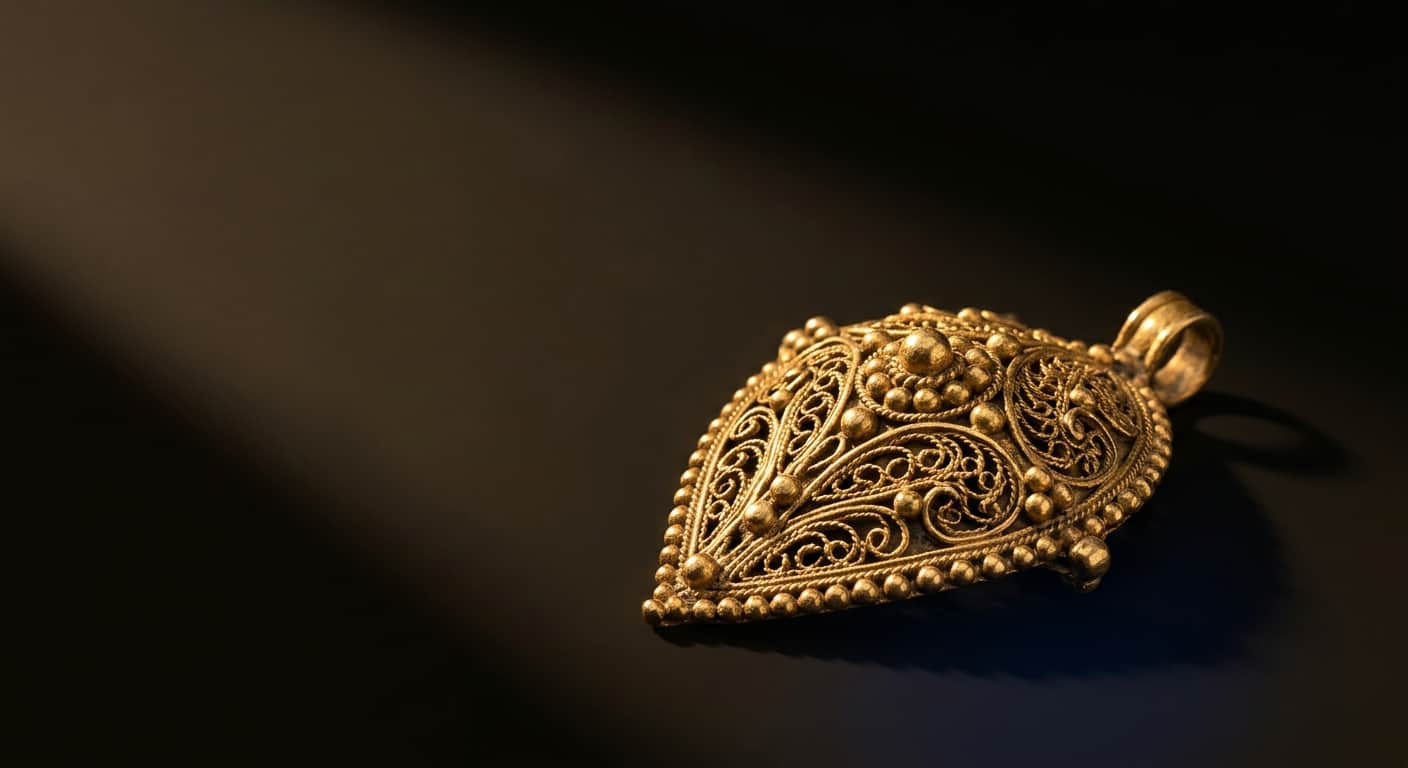
jewelry.am is an independent editorial publication about Armenian jewelry — its history, its techniques, and the culture that shaped it. We are a reader, not a shop: there is nothing here to buy, and nothing for sale. Our only product is a faithful account of the craft, built from primary sources and made freely available in English, Armenian, and Russian.
Our mission
Armenian goldsmithing is one of the oldest continuous craft traditions in the world, and one of the least written about in plain, sourced language. Most of what exists online is either a sales catalogue or a thin summary copied from another thin summary. We exist to do the opposite: to publish careful, cited, genuinely useful writing on the subject and to point readers — always — back to the museums, scholars, and records the knowledge actually comes from.
We cover the informational and cultural half of the subject: the history of Armenian goldwork from Urartu onward, techniques such as filigree and granulation, the symbols carried in Armenian ornament, the place of jewelry in wedding and ceremonial tradition, and the makers and workshops that keep the craft alive. We do not sell jewelry, we do not recommend what to buy, and we do not run a store. When a topic touches commerce, we write the cultural and historical account of it, not a buying guide.
We are a reader, not a shop: there is nothing here to buy.
The editor
jewelry.am is edited to a documented standard rather than around a single personality. Subjects are chosen for their place in the record — what the museums hold, what the scholarship has established, what a reader genuinely needs explained — and not for what sells. Every claim is traced back to a primary source, the writing is kept readable and free of marketing, and the editorial desk's job is to hold the work to that standard, article after article.
We are honest about expertise rather than performing it. This publication does not claim to be staffed by credentialed scholars of the field; where a piece has been reviewed by a subject-matter expert or an Armenologist, we credit that review by name, and where it has not yet been, we say so plainly. As the coverage matures we intend to commission and name real specialist contributors — until then, an honest "sources verified" posture is the most any unreviewed page will ever claim.
How we research
We work primary-source first. The starting point for any article is the record itself: museum collections and catalogues, peer-reviewed scholarship, archival material, and the published documentation of cultural institutions such as UNESCO. We link to those sources inline, name the holding institution, and prefer a verifiable date and object number over a confident generalisation.
We separate what is established from what is debated, and we mark the difference in the text rather than smoothing it over. When the scholarship disagrees, we show the disagreement. When a fact is uncertain, we label it uncertain instead of rounding it up.
Expert review is planned and, where it has happened, attributed by name. We will never invent a reviewer or attach a fabricated credential to a piece to make it look more authoritative — an honest "sources verified" posture is the most we will ever claim on a page that has not been formally reviewed.
Corrections & contributions
We would rather be corrected than be wrong. If you find an error of fact, a mis-cited source, a mistranslation, or a date that does not hold up, tell us and we will fix it and note the change. Subject-matter experts and Armenologists who would like to review or contribute to a piece are especially welcome.
The wider craft
The living craft is bigger than any one workshop. Armenian jewelry today is made by ateliers and independent jewelers in Yerevan, across Armenia, and throughout the diaspora, and our coverage of contemporary makers is meant to reflect that wider field on equal terms, not to favour any single one. We are an editorial publication, not a storefront, and we keep it that way deliberately.