The Register
Armenian Jewelers & Workshops
A documentary register of the makers — workshops and manufacturers in Armenia, artisan masters, diaspora houses, and the institutions of the craft. Every entry is compiled from public sources and re-checked before publication.
- Entries
- 42
- With profiles
- 36
- Sections
- 4
- Countries
- 10
Who makes Armenian jewelry today? This directory documents the working landscape of the craft: the manufacturers of Yerevan, the silversmiths of Gyumri and Dilijan, the diaspora houses from Geneva to São Paulo, and the associations, foundations and schools that carry the tradition. It is a work of documentation, not a shopping guide — entries are compiled from public, verifiable sources (business registries, museum programs, cultural press) and describe each maker's craft identity, not its wares.
Index of names
- Achikian Goldsmiths (Ken & Maral Achikian)
- Aguletsi Jewelry (Astghik Samvelyan)
- AJA East Coast (USA)
- Ara Vartanian
- Arevi Jewelry
- Arman Sarkisyan
- Armenian Jewellers Association (AJA)
- Armenian Jewellers Foundation (AJF)
- Artinian – Fine Jewellery (Sartoro)
- Arubani
- Avetisian Jewelry
- Barmakian Jewelers
- Boghossian
- Buduart Studio
- Chakhoyan's Gallery (Sergo Chakhoyan)
- Davtyan Jewelry Company
- Estet (Gevorkyan Jewellery Group)
- Gugoco
- HAY CROSS
- IceLink
- JCA — Jewellery Company of Armenia
- JEVO (Mamikon & Ashot Mikayelyan)
- KARA Silver Salon (Karine Avetisyan)
- Kazanjian
- Kirk Kara
- MARLI New York (Maral Artinian)
- Musheghyan Jewelry (Ruben Musheghyan)
- Prazyan Jewelry
- Pregomesh
- Sevan Bıçakçı
- Sylva & Cie (Sylva Yepremian)
- Tarakhchyan family of jewelers
- Tateossian
- Ti Amo Jewelry
- Tsolak Koshtoyan
- Tufenkjian
- TUMO Studios
- VAHAN Jewelry (Der Calousdian family)
- Yeprem
- Yerevan Jewelry Plant (“Emil Grigorian” / Gnomon)
- YESSAYAN
- Yvan Tufenkjian
Workshops & manufacturers of Armenia
From Armenia's first jewelry plant to the contract workshops of modern Yerevan.
Arubani
Yerevan, Armenia · 2021
Gold-plated silver; ancient-culture motifsA Yerevan brand producing gold-plated silver jewelry inspired by ancient Armenian culture — founded, per the brand, in February 2021 and named for Arubani, the Urartian goddess of fertility and art.
Davtyan Jewelry Company
Yerevan, Armenia · 2007
Gold and silver jewelry; enamel workProfileA small Yerevan workshop-manufacturer with its own showroom, registered as a producer of gold and silver jewelry with enamel and stone-set pieces.
JCA — Jewellery Company of Armenia
Yerevan, Armenia · 2001
Gold jewelry set with precious stonesProfileA Yerevan jewelry factory working in gold set with precious stones — rings, earrings, necklaces, pendants, crosses, brooches and cufflinks — exporting since the early 2000s. The company dates itself to 2001; its legal registration followed in February 2002.
Prazyan Jewelry
Yerevan, Armenia · 2006
Contract (white-label) fine-jewelry manufacturingProfileA Yerevan contract manufacturer — operating, per the workshop, since 2006 — producing fine jewelry for outside brands, from 3D modeling and printing through hand-finishing and gem setting.
Pregomesh
Yerevan, Armenia · 2012
Sterling silver; traditional Armenian symbols and ornamentsProfileA Yerevan brand-workshop founded in 2012 by the singer Sirusho, where a team of silversmiths hand-makes sterling-silver and 14K-gold pieces reinterpreting historical Armenian symbols, patterns and ornaments researched from traditional jewelry.
Ti Amo Jewelry
Yerevan, Armenia · 2013
Precious-metal jewelry manufacturingProfileA Yerevan manufacturer on Mashtots Avenue, registered as a producer of precious-metal jewelry and established in 2013 per the business registry; its collections include an alphabet-themed Mashtots line and cross and bridal pieces.
Yerevan Jewelry Plant (“Emil Grigorian” / Gnomon)
Yerevan, Armenia · 1950
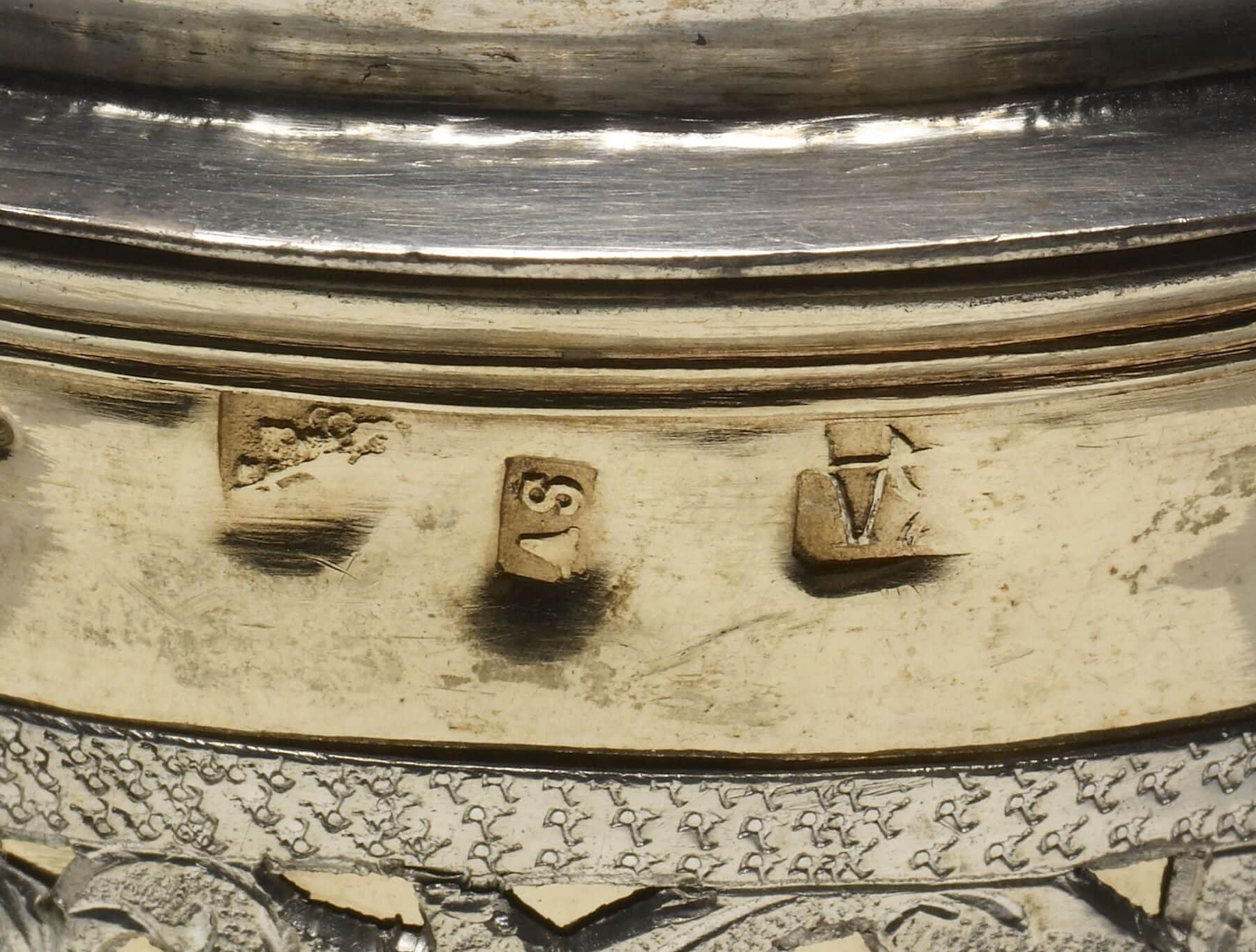
Gold in 585/750/958; medals and commemorative coins; heritage collectionsProfileArmenia's first jewelry company, founded in 1950 as the Yerevan Jewelry Plant — later branded Gnomon, today trading as Emil Grigorian. It combines hand and machine production in 585, 750 and 958 gold with in-house diamond cutting; its heritage collections draw on Western Armenian church motifs and medieval bird-letter calligraphy, and its Soviet-era hallmark sequence, begun in 1953, still dates collector pieces.
Artisan masters & studios
Independent masters and small studios — Yerevan, Gyumri, Dilijan — including the hereditary lines of the Alexandropol school.
Aguletsi Jewelry (Astghik Samvelyan)
Yerevan, Armenia
Silver; ornaments from an ethnographic collectionProfileA silver line established by Astghik Samvelyan in memory of her mother, the painter and ethnographer Lusik Aguletsi, at the family's house-museum: jewelry recreating traditional Armenian ornaments drawn from the museum's ethnographic collection.
Arevi Jewelry
Yerevan, Armenia
Silver and gold; individual designsA Yerevan studio working in silver and gold with an individual-design service, presenting its work through Ararat and sun heritage motifs on its own trilingual site.
Avetisian Jewelry
Yerevan, Armenia
Ethnic and contemporary silver; daghdighan amulets; enamelA Yerevan workshop presenting itself as a two-generation family practice: ethnic and contemporary silver jewelry — including daghdighan, the traditional keepsake-amulet pieces — with enamel work.
Buduart Studio
Dilijan, Armenia · 2008
Copper-wire jewelry; designs from museum artifactsProfileA Dilijan studio run by Arman Badeyan and Margarita Malkhasyan since 2008, known for copper-wire jewelry and designs drawn from museum artifacts, documented through the Smithsonian's My Armenia program.
Chakhoyan's Gallery (Sergo Chakhoyan)
Yerevan, Armenia · 2005
Workshop jewelry; Yerevan and Glendale presenceProfileThe workshop-gallery of jeweler Sergo Chakhoyan: by the gallery's own account his study of jewelry making began in Australia in 1997, and in 2005 he established his first workshop in Armenia. It works from Movses Khorenatsi Street in Yerevan, with a second address in Glendale, California.
JEVO (Mamikon & Ashot Mikayelyan)
Gyumri, Armenia · 2011
Silversmithing; repoussé (chekanka); in-house alloysProfileA Gyumri silversmithing workshop founded by brothers trained at the city's arts academy: repoussé work, in-house alloying of silver, brass, copper and melchior, and settings in natural stone and wood — profiled by the Smithsonian's My Armenia program and Homo Faber.
KARA Silver Salon (Karine Avetisyan)
Yerevan, Armenia · 2008
Silver with enamel and mixed media; petroglyph and medieval motifsProfileKarine Avetisyan's Yerevan studio, working since 2008 in handcrafted silver with enamel and mixed media — leather, wood, brass, semi-precious stones — in motifs reaching back to petroglyphs and medieval Armenian ornament; Homo Faber describes pieces so detailed they read as sculpture.
Musheghyan Jewelry (Ruben Musheghyan)
Yerevan, Armenia · 1996
Handmade gold and silver jewelryProfileA Yerevan atelier founded in 1996 by the jeweler Ruben Musheghyan, styled an Honored Master of Armenia; its pieces are described as predominantly handmade. Work has been presented under the “Musheghyan Jewelry (MJ)” brand since 2000.
Tarakhchyan family of jewelers
Gyumri (Alexandropol), Armenia
Historic dynasty — gilded silver, engraving, medal carvingProfileA four-generation dynasty of Alexandropol gold- and silversmiths working from the nineteenth century: gilded silver vessels, engraving, medal carving, tobacco boxes and pipe stems. The masters are gone; family pieces survive in museum collections.
Tsolak Koshtoyan
Gyumri, Armenia
Alexandropol-school silversmithing; mushurba vesselsProfileA hereditary Gyumri master of the Alexandropol silversmithing school, working with inherited nineteenth-century molds and hand tools: silver belts, bracelets, and the mushurba — the “gurgling” drinking vessel — with work presented to visitors including the Pope.
Diaspora houses & ateliers
Houses founded by Armenians abroad — Geneva, London, Boston, New York, Los Angeles, Beirut, Istanbul, Moscow, Bangkok, São Paulo — carrying the craft across six generations of exile and exchange.
Brazil
Ara Vartanian
São Paulo, Brazil · 2000
Stone-led design; inverted diamond settingsProfileThe house of Ara Vartanian — born in Beirut in 1975 into a family of jewelers, raised in São Paulo — designing since 2000: inverted diamonds set point-up, hook earrings, and multi-finger rings, with showrooms in São Paulo and a Mayfair, London flagship.
France
HAY CROSS
France
French-made jewelry with Armenian traditionsA family-run French house describing complete production within its own workshops under the Made in France label, combining French know-how with Armenian traditions; collections carry names such as Hayr Mer, Sardarabad and Myosotis — the forget-me-not.
Lebanon
Tufenkjian
Beirut, Lebanon · 1909
Watches and jewelry; a century-old Beirut houseProfileA Beirut house of watches and jewelry whose own legacy page dates its doors to Leon Tufenkjian more than a century ago — 1909 — with press rendering the house as Tufenkjian Frères; it is listed on a platform of Armenian-owned jewelry businesses.
Yeprem
Beirut, Lebanon · 1964
Avant-garde hand and body jewellery in diamondsProfileA family house founded in Beirut in 1964 by Yeprem Chakardemian; its second generation redirected the workshop toward sculptural hand and body jewellery in diamonds, of which the handpiece known as The Claw is the most documented example.
YESSAYAN
Lebanon
Lebanese-Armenian artisan workshopA Lebanese workshop describing itself as a home of Lebanese-Armenian artisan jewelry makers, with techniques and trade secrets imparted from one generation to the next. The house's own timeline begins the brothers Krikor and Haroutioun Yessayan's jewelry career in 1977 — a dating that rests on the brand's pages alone, so no founding year is recorded here.
Yvan Tufenkjian
Beirut, Lebanon
Beirut jewelry houseProfileA Beirut jewelry house with a flagship on Foch Avenue in the city's Downtown and a retail network across Lebanon and the Gulf. Its own legacy page opens with the same 1909 Leon Tufenkjian founding story the Tufenkjian house records; the two houses are documented separately in this registry.
Russia
Estet (Gevorkyan Jewellery Group)
Moscow, Russia · 1991
Full-cycle manufacture; hot and cold enamel; granulationProfileA Moscow jewelry house founded in 1991 by the Gevorkyan family: full-cycle manufacture in gold and silver with hot and cold enamel, chasing, granulation, engraving and blackening.
Switzerland
Boghossian
Geneva, Switzerland · 1868
High jewellery; Art of Inlay; the Kissing settingProfileA six-generation family line of gem traders and jewelers begun in 1868 under Ovaness Boghossian, with roots in Mardin, passing through Aleppo, Beirut and Antwerp before settling in Geneva; the family launched its own maison in 2008. Its documented signatures are the Art of Inlay — one stone set within another — and the metal-free Kissing setting joining two gems.
Thailand
Artinian – Fine Jewellery (Sartoro)
Bangkok, Thailand
Family jewellery house; the Sartoro brandProfileA Bangkok family house tracing to a small jewellery atelier begun by the Armenian brothers Yervant and Souren Artinian in the early 1950s; Artinian Co., Ltd. was established in Bangkok in 1997 and the house launched its Sartoro brand in 2003.
Turkey
Sevan Bıçakçı
Istanbul, Turkey · 2002
Reverse intaglio carved inside gemstonesProfileThe Istanbul atelier of Sevan Bıçakçı, trained in the Grand Bazaar's master-apprentice tradition under Hovsep Çatak: reverse intaglio carved inside gemstones, domed rings depicting Istanbul, and Byzantine and Ottoman iconography.
United Kingdom
Tateossian
London, United Kingdom · 1990
Men's cufflinks; kinetic mechanical designsProfileThe London house of Robert Tateossian, founded in 1990 and documented chiefly for men's cufflinks — kinetic gear and tourbillon constructions in unconventional materials from meteorite to dinosaur bone — with an Armenia Heritage collection drawing on Armenian history and architecture.
United States
Achikian Goldsmiths (Ken & Maral Achikian)
Vienna, Virginia, United States · 1990
Goldsmithing with an on-site workshopProfileA Virginia workshop established, per the house, in 1990 by Ken and Maral Achikian — a master goldsmith who apprenticed from age fourteen abroad and immigrated during wartime — maintaining its own goldsmith on premises; its lines include an Armenian Collection.
Arman Sarkisyan
Los Angeles, United States · 2004
22-karat gold and oxidized silver; hand fabricationProfileThe Los Angeles atelier of Arman Sarkisyan, working since 2004 in 22-karat gold and oxidized silver, hand-fabricated from concept to completion; he trained for roughly three decades under his father, a master jeweler whose career spanned Armenia and Russia.
Barmakian Jewelers
Boston, United States · 1910
Diamond wholesaling and manufacturing; lost-wax castingProfileA multi-generation family firm in the Boston area, tracing to an arrival around 1910: diamond wholesaling and manufacturing with precision lost-wax casting and custom handcrafting.
Gugoco
New York, United States
Heritage-collection jewelryA New York line of handcrafted jewelry presenting Armenian heritage collections — Nairi, Cilicia and letter and cross series among them — under its own registered marks; the maker's own pages do not state a founder or production location, so this entry stays terse.
IceLink
Los Angeles, United States · 2003
Gem-set timepieces; diamond jewelryProfileA Los Angeles father-daughter family enterprise making gem-set timepieces — the 6Timezone collection is its most documented line — and diamond jewelry.
Kazanjian
Beverly Hills, United States · 1913
Precision gemstone cutting; notable stonesProfileA Beverly Hills house founded, by its own account, in 1913 by the brothers Harry and James Kazanjian, documented for precision gemstone cutting and for notable stones including the Kazanjian Red Diamond and the Black Star of Queensland.
Kirk Kara
United States
Hand engraving; filigreeProfileA family engraving house whose own origins page traces an 1890 workshop of hand-engraved jewelry inspired by Armenian carving, a founder lost in the Armenian Genocide, a re-opening in Beirut, and the family's 1983 move to America — renamed Kirk Kara in 2000.
MARLI New York (Maral Artinian)
New York, United States · 2014
Contemporary fine jewelry; Artinian family lineageProfileFounded by Maral Artinian — the brand's own page dates it 2014, the family timeline 2013 — MARLI carries a three-generation Artinian craft legacy, with production in the family's Bangkok facility and boutiques in New York, Geneva, Paris and Dubai.
Sylva & Cie (Sylva Yepremian)
Los Angeles, United States · 2008
Handmade jewelry; a Cartier-trained lineageProfileThe Los Angeles house of Sylva Yepremian, founded in 2008 per trade press (a 2007 date also circulates): her father Jirair Guiragossian was a master jeweler trained at Maison Cartier in Paris, and the jewelry is handmade in Los Angeles.
VAHAN Jewelry (Der Calousdian family)
New York, United States · 1968
Hand-crafted atelier jewelry; three generationsProfileFounded in 1968 by the classically trained French designer Sacha Der Calousdian from a one-man Manhattan studio; the brand names three generations on its own pages, and an industry obituary records the founder born in France to an Armenian family, grandson of a maker of diamond crowns for the Shah of Persia in 1906.
Institutions & education
The associations, foundations and schools that organize, document, and teach the craft.
AJA East Coast (USA)
New York, United States · 1999
Regional chapter in the New York Diamond DistrictProfileThe association's East Coast chapter, based in New York's Diamond District since 1999: educational workshops, trade-show participation, exhibitions of Armenian jewelry craftsmanship, and community initiatives.
Armenian Jewellers Association (AJA)
Global network · 1997
Pan-Armenian professional network of jewelersProfileThe pan-Armenian professional network of jewelers, formed in 1997 — first meetings in Yerevan, formal launch in Basel: industry development in Armenia, the Yerevan Show trade exhibition, and young-designer showcases at GemGenève.
Armenian Jewellers Foundation (AJF)
Geneva, Switzerland · 2013
Research and documentation of Armenian jewellery heritageProfileA Geneva foundation researching and documenting the heritage of Armenian jewellery: a digital library of the art's history, publications and exhibitions such as Treasures of Western Armenia, and gemological scholarships — with documented activity through the late 2010s.
TUMO Studios
Yerevan, Armenia · 2017
Free craft-and-design education; jewelry atelierProfileA free craft-and-design education program in Yerevan with a jewelry atelier among its workshops, pairing local students with international designers to ground contemporary design in Armenian artisanal heritage.
About this directory
- Who is included in this directory?
- Makers and institutions of Armenian jewelry — workshops and manufacturers in Armenia, independent artisan masters, houses founded by Armenians in the diaspora, and the associations, foundations and schools of the craft. Every entry is verified against public sources before inclusion; resellers without a making identity are not listed.
- Is this a shopping guide?
- No. jewelry.am is an editorial publication: it sells nothing, ranks no maker, and gives no purchase advice. Entries describe each maker's documented craft identity — techniques, lineage, place — in alphabetical order, and inclusion is editorial and unpaid — it cannot be bought. The editor also works commercially in the jewelry trade, and no business in which the editor has any interest is listed here; that disclosure is set out in full on the About page.
- How are entries verified?
- Each entry is compiled from public, verifiable sources — business registries, museum and heritage programs, cultural press, and the maker's own published record — and every source is re-checked before publication. Where a fact rests only on the maker's own account, the entry says so; details that could not be verified, such as an undocumented founding year, are left out rather than guessed.
This directory is necessarily incomplete: it lists makers whose work could be verified in public sources at the time of writing, and some notable workshops are absent where documentation was insufficient. It grows as verification allows — corrections and additions are welcome.
Read our disclosure of interest